HEATING HELP · NEW JERSEY · WINTER 2026-27
New Jersey LIHEAP & USF 2026-27: Open Now
✓ Official sources re-checked November 20, 2026: all 10 official sources on this page loaded, no changes found. How we check
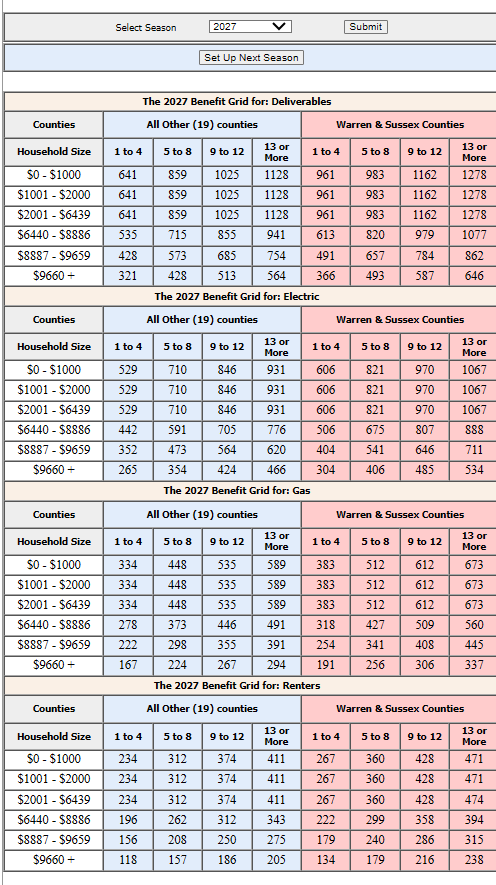
Yes, New Jersey LIHEAP is open. Applications run October 1, 2026 to June 30, 2027, first come, first served, until the money runs out. A household with gross income at or below 60% of the state median income may qualify for a heating benefit of $118 to $1,278 for the season, usually paid to its utility or fuel supplier, and the same application also applies for the Universal Service Fund (USF), a monthly credit of up to $200 on gas and electric bills (NJ DCA FFY 2027 fact sheet; DCA 2027 benefit matrix). Both are grants, not loans.
Apply online through DCAid (reached from energyassistance.nj.gov), or through the application agency for your county. Questions: the Energy Assistance Hotline, 1-800-510-3102.
2026-27 dates at a glance
| What | When |
|---|---|
| LIHEAP and USF applications open | October 1, 2026 (NJ DCA fact sheet) |
| Winter Termination Program (shutoff protection for listed groups) | November 15, 2026 to March 15, 2027 (NJ BPU) |
| Emergency heating help (no heat, out of fuel) | December through June 30; gas and electric emergencies from the end of the moratorium on March 15 (DCA FY2027 LIHEAP handbook, section 3.5) |
| Applications close | June 30, 2027, or earlier if funds run out (NJ DCA fact sheet; FFY 2027 model plan) |
The DCAid portal's front page still carries a notice about the 2025 season closing under its 2027 "now open" notice. The 2027 notice is the current one, and it matches the fact sheet and the state plan.
New Jersey LIHEAP and USF income limits
Your household's gross income, before taxes, must be at or below 60% of the New Jersey state median income for your household size. The same limits apply to LIHEAP and USF (NJ DCA FFY 2027 fact sheet). There is no asset test (DCA handbook, section 2.3).
| Household size | Monthly income limit | Yearly income limit |
|---|---|---|
| 1 | $4,273 | $51,273 |
| 2 | $5,587 | $67,049 |
| 3 | $6,902 | $82,825 |
| 4 | $8,217 | $98,602 |
| 5 | $9,532 | $114,378 |
| 6 | $10,846 | $130,154 |
| 7 | $11,093 | $133,112 |
| 8 | $11,339 | $136,070 |
| 9 | $11,586 | $139,028 |
| 10 | $11,832 | $141,986 |
| 11 | $12,079 | $144,944 |
| 12 | $12,325 | $147,903 |
For more than 12 people, add $246 a month ($2,952 a year) for each additional member. These limits are much higher than many people expect: a family of four can earn about $98,600 a year and still qualify, because New Jersey uses 60% of its state median income rather than a poverty-level cut-off. Near the limit? Apply anyway; the agency decides.
Who may qualify
- Your household pays for its own heating or cooling, either directly to a utility or fuel supplier or as part of your rent.
- Gross income is at or below the limit above for your household size.
- Renters and homeowners can both apply.
- Not eligible for the heating benefit: people in public housing or getting rental assistance whose subsidy covers all heating costs, unless they pay heating costs directly to the fuel supplier; households whose heating costs are paid by someone outside the household; and households made up only of students who are another household's tax dependents.
From the DCA fact sheet and the FY2027 handbook (section 2.3). For USF you also need a residential gas or electric bill in a household member's name.
Some SNAP households get the heating benefit without applying. DCA's handbook says certain SNAP households that pay their own heat are paid automatically during the heating season from their SNAP record; households not selected get a notice telling them where to apply (section 3.1). If you are not sure whether you were selected, apply.
How much is the benefit?
- LIHEAP heating benefit: $118 to $1,278 for the season, paid once. The amount depends on household size, monthly income, heating fuel and county: households heating with oil, propane or other delivered fuels get the most ($321 to $1,278), then electric heat ($265 to $1,067), then natural gas ($167 to $673), and renters with heat included in rent the least ($118 to $471). Warren and Sussex counties get higher amounts than the other 19 (DCA 2027 benefit matrix; minimum and maximum confirmed in the FFY 2027 model plan).
- USF: a monthly credit of up to $200 on your gas and non-heating electric bills, covering costs above a set share of your income that depends on your heating type (DCA fact sheet; DCA USF page).
- Medically necessary cooling: $300, once, for a household where a licensed medical practitioner certifies that someone's health is in serious danger without cooling (fact sheet; handbook section 3.4).
How it is paid: if you heat with gas or electricity, the LIHEAP benefit usually goes straight to your utility as a credit. If you pay a fuel supplier, you get a two-party check made out to you and the supplier. If heat is in your rent, the check is made out to you (DCA fact sheet). The handbook caps a household's regular program benefits at $4,878 a season, not counting emergency help (section 3.6).
No heat, out of fuel or a shutoff notice?
LIHEAP-eligible households can get emergency energy assistance when they are without heat or about to lose it and cannot pay for fuel, or when heat is in the rent and a shutoff notice arrives (DCA handbook, section 3.5):
- Emergency fuel or a utility payment: up to $800, plus a reconnection fee of up to $100 (handbook; the model plan gives the same $800 winter-crisis maximum).
- Emergency furnace repair or replacement: up to $2,000, with pre-approval from the agency (handbook; model plan).
- Timing: the agency must offer some help within 48 hours of the request, or 18 hours if the situation is life-threatening. Emergency help runs December through June 30; for gas and electric it starts when the shutoff moratorium ends on March 15.
Call your county application agency or the hotline at 1-800-510-3102. All emergency help depends on funds being available.
How to apply
- Online: go to energyassistance.nj.gov and click Apply Now, which opens the state's DCAid portal. One application covers LIHEAP, USF and weatherization.
- On paper: download the Home Energy/USF/Weatherization application from the DCA LIHEAP page and return it to the application agency for your county. The agency list also gives each county's utility contacts.
- Age 60 or over, or disabled: you can apply by mail or ask your county agency for a home visit (DCA fact sheet).
- By phone: the Energy Assistance Hotline, 1-800-510-3102, can tell you the nearest agency; 211's utility line is 1-866-240-1347 (DCA USF page).
You will need proof of income for everyone in the household and proof that you pay for heat (a utility bill or a fuel bill in a household member's name, or your lease). DCA's handbook says a completed application should be approved or denied within 60 days, or 30 days for elderly or disabled applicants, and you can ask for a fair hearing if it is not (section 1.1).
Can my heat be shut off this winter in New Jersey?
From November 15 to March 15, the Winter Termination Program protects listed customers from having gas, electric, water or wastewater service shut off: people getting HEAP/LIHEAP, USF, Lifeline, TANF, SSI, PAAD or General Assistance, applicants for water-bill assistance, and residential customers who self-certify that they cannot pay because of unemployment, illness, medical bills, a death in the family or similar hardship. Call your utility to ask for the protection; questions it cannot answer go to NJ BPU at 1-800-624-0241. The protection does not cancel what you owe, and a LIHEAP or USF benefit goes toward that bill. BPU also says gas, electric, water and wastewater customers can ask for reconnection once a year per service with proof of a USF, LIHEAP or PAGE application, after a down payment of up to 25% of the balance.
Other help in New Jersey
- NJ BPU's assistance programs page lists PAGE and NJ SHARES for households over the LIHEAP limit, Lifeline (a yearly energy benefit for seniors and people with disabilities, through NJSAVE) and Comfort Partners (free energy-saving work).
- NJ ANCHOR: property tax relief for homeowners and renters, and what happens after the November 2 deadline.
- NJ FamilyCare: Medicaid and CHIP health coverage.
- Not sure what else fits? Check which programs you may qualify for. It is free, with no sign-up.
Frequently asked questions
Is New Jersey LIHEAP open now?
Yes, from October 1, 2026 to June 30, 2027, first come, first served, until funds run out (NJ DCA).
How much is a New Jersey LIHEAP heating benefit?
$118 to $1,278 for the 2027 season, by household size, monthly income, heating fuel and county (details above).
What is the income limit for LIHEAP and USF in New Jersey?
60% of state median income: $4,273 a month for one person, $8,217 a month for four. The full table is above.
What is the Universal Service Fund (USF)?
A New Jersey program that puts a monthly credit of up to $200 on gas and electric bills for households under the same income limit. Your LIHEAP application is also your USF application, and you can get both (DCA).
Do I have to pay it back?
No. LIHEAP and USF are grants. The handbook does say a household paid more than the program maximum can be asked to repay the excess (section 3.6).
I rent and heat is included in my rent. Can I apply?
Yes, if you are not in public or subsidized housing where the subsidy covers heating. Renters with heat in rent get the lowest benefit tier ($118 to $471) as a check made out to them (fact sheet; benefit matrix).
Can my heat be shut off this winter in New Jersey?
From November 15 to March 15 the Winter Termination Program protects LIHEAP and USF recipients and customers who self-certify a hardship; call your utility to ask for it (details above).
What about other states?
See LIHEAP 2026-27 open dates by state, our New York HEAP guide and our Pennsylvania LIHEAP guide.
Already have a credit card? See what its yearly fee gets you
Some cards charge a fee every year just to keep them. Our free card checker shows your card’s fee and any money-back credits, taken from the bank’s own page, side by side. No card number, no sign-up, no credit check; nothing you choose leaves your device.
Check the card you haveHow to tell if a yearly fee is worth it →Sources
NJ DCA: LIHEAP and USF FFY 2027 fact sheet · NJ DCA: Low Income Home Energy Assistance (LIHEAP) · NJ DCA: Universal Service Fund · NJ DCA: FY2027 LIHEAP handbook (PDF) · NJ DCA: FY2027 benefit matrix · NJ DCA: LIHEAP detailed model plan, FFY 2027 (PDF) · NJ DCA: LIHEAP/USF application agencies by county · DCAid application portal · NJ BPU: assistance programs (Winter Termination Program). Read November 12, 2026. This page is general information, not advice, and is not a government site.